How to Track Equipment Across Jobsites Without Spreadsheets
Track equipment across jobsites with real-time visibility, better utilization, and fewer calls, spreadsheets, and manual handoffs.
- Equipment Management
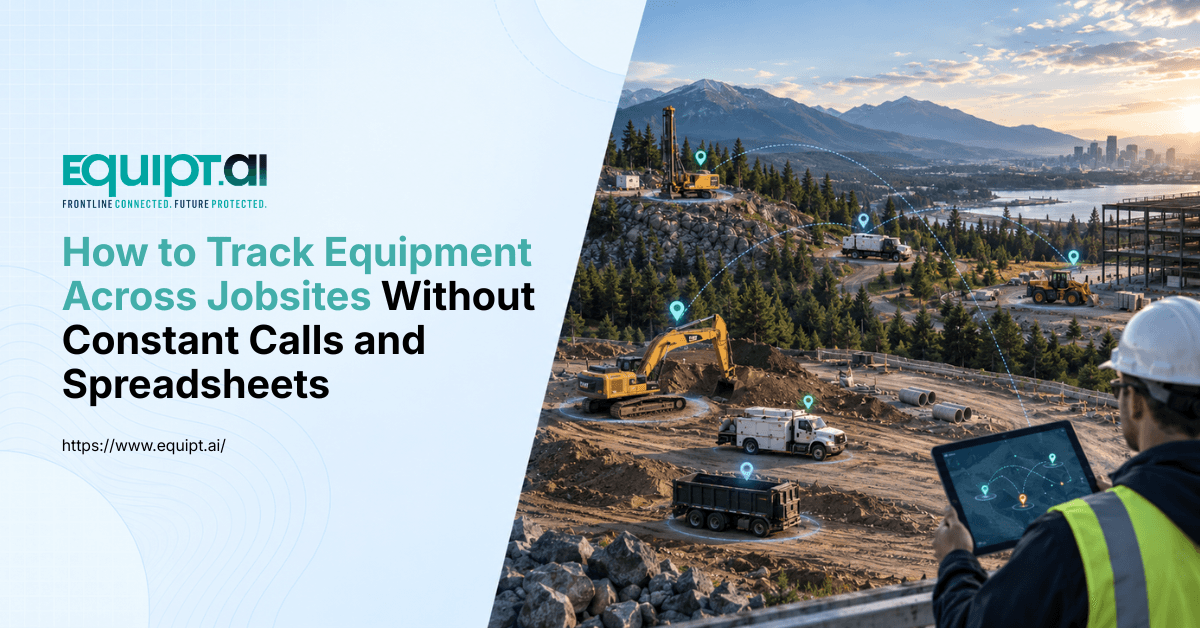
When equipment is spread across multiple jobsites, knowing exactly where every asset is should be simple. Yet for many field operations teams, finding a generator, excavator, compressor, trailer, or service vehicle still starts with a phone call. See how construction and infrastructure teams get that visibility across projects.
The dispatcher calls the site supervisor. The supervisor asks the crew. Someone checks a spreadsheet. Another person remembers that the equipment might have been moved to a different project two days ago.
Eventually, the asset is found. But by then, valuable time has already been lost.
As operations grow across more projects, crews, yards, and customer locations, manual equipment tracking becomes increasingly difficult to maintain. The answer is not another spreadsheet. Teams need a centralized system that shows where equipment is, who is using it, whether it is available, and what condition it is in.
Why Equipment Tracking Becomes Difficult Across Multiple Jobsites
Tracking equipment at a single location is relatively straightforward. When assets begin moving between several jobsites, warehouses, service locations, and customer sites, the number of handoffs increases quickly.
An excavator might finish work at one site and be transferred to another project. A compressor could return to the yard but remain marked as deployed. A technician may take a tool to another job without the transfer being recorded.
The problem is rarely that nobody cares where the equipment is. The problem is that the tracking process depends too heavily on people remembering to update information manually.
Common symptoms include:
-
Dispatchers repeatedly calling supervisors to locate equipment
-
Multiple spreadsheets containing different asset information
-
Equipment appearing available when it is already assigned
-
Teams renting equipment because owned assets cannot be located
-
Assets remaining idle at completed jobsites
-
Maintenance teams discovering equipment only after service is overdue
-
Project managers reserving the same equipment for overlapping jobs
At a small scale, teams may be able to work around these problems. As the fleet and number of active jobs increase, those workarounds become operational bottlenecks.
Create One Source of Truth for Every Asset
The first step toward eliminating calls and spreadsheets is establishing a central asset record.
Each piece of equipment should have a digital profile containing information such as:
-
Asset ID
-
Equipment category
-
Current location
-
Assigned job or customer
-
Availability status
-
Assigned operator or crew
-
Maintenance status
-
Inspection records
-
Certifications
-
Usage or engine hours
-
Expected return date
-
Ownership or rental status
Instead of asking several people where an asset might be, dispatchers and operations managers can check one system.
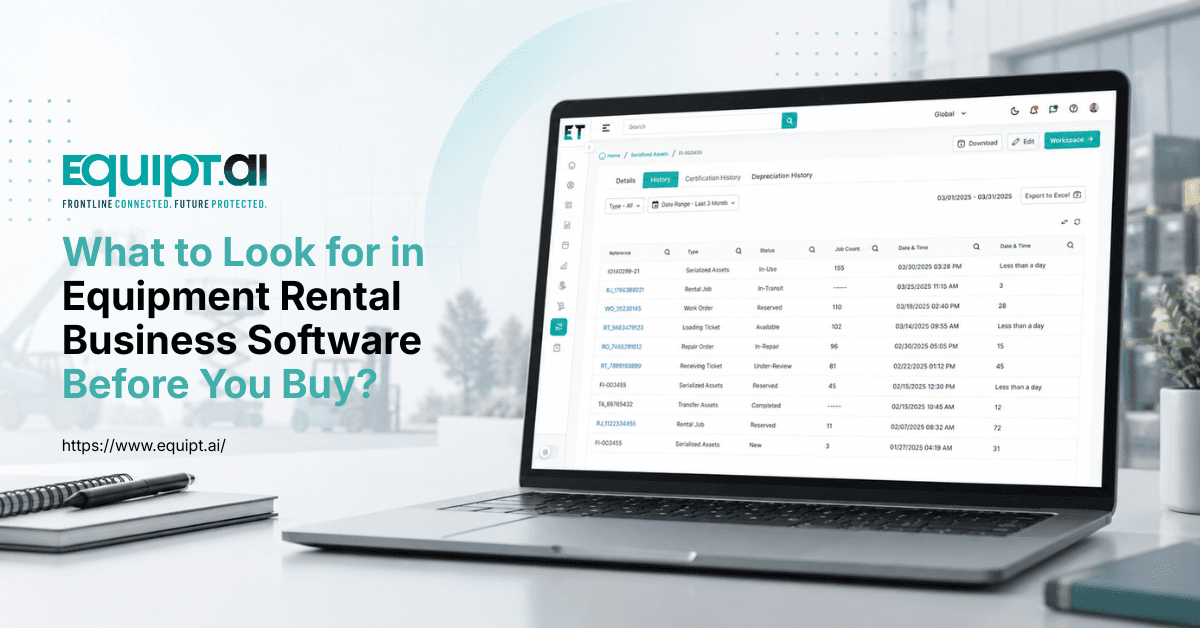
This is particularly important for companies managing a mix of owned, rented, and subleased assets. An equipment rental management software platform can help teams maintain visibility into equipment availability, rental status, allocation, returns, and redeployment from one operational view.
Track Equipment by Job, Not Just by Location
Knowing that a compressor is at "Site B" is useful, but operations teams usually need more context.
Why is it there?
Which job is using it?
When will the job finish?
Who is responsible for the equipment?
Is it available for another project tomorrow?
Equipment tracking should therefore connect each asset with the job it supports.
When equipment is dispatched, its record can automatically show the assigned job, crew, expected duration, location, and operational status. When the job is completed, the equipment can move into another status such as awaiting pickup, in transit, returned, inspection required, or available.
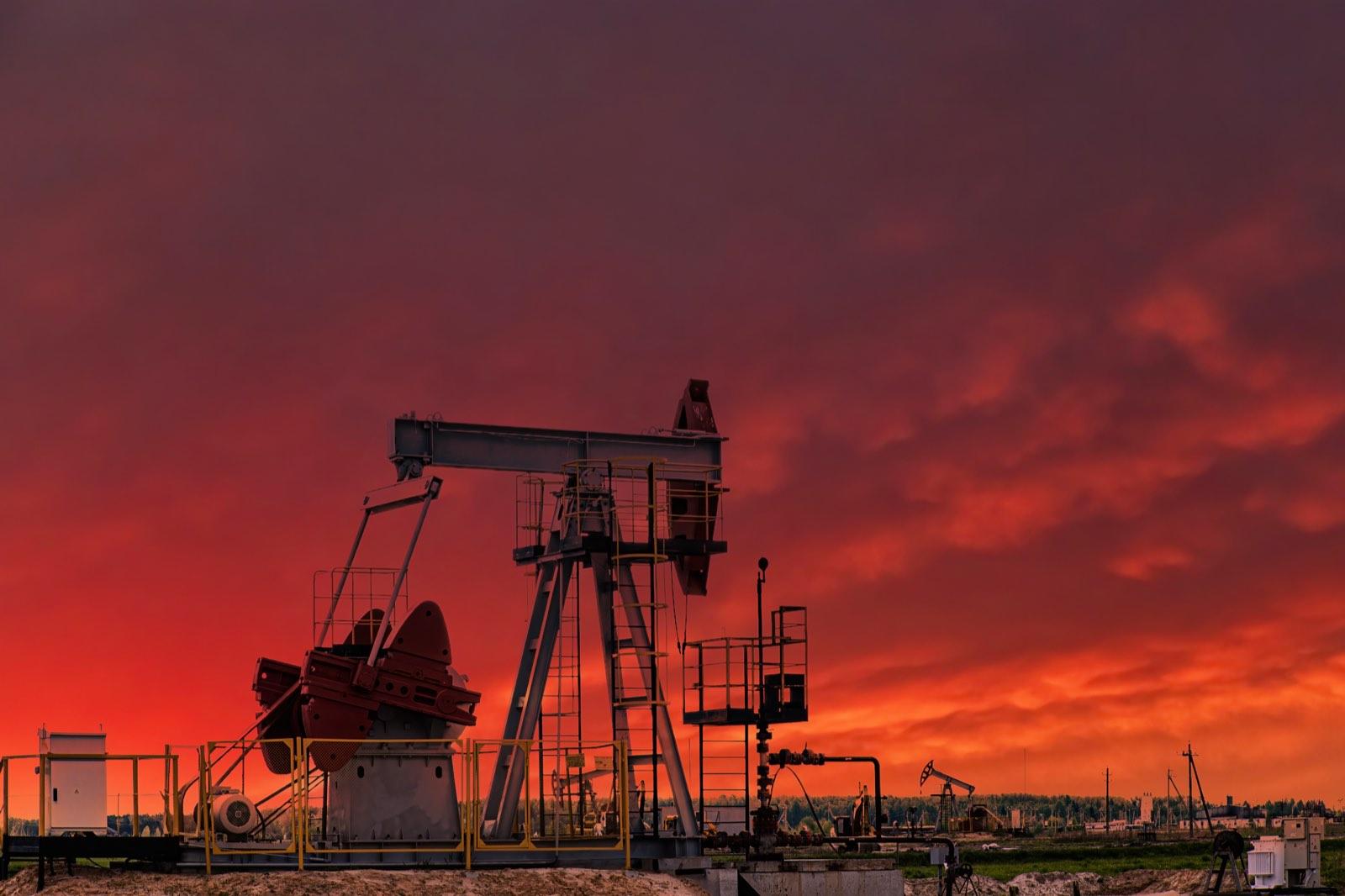
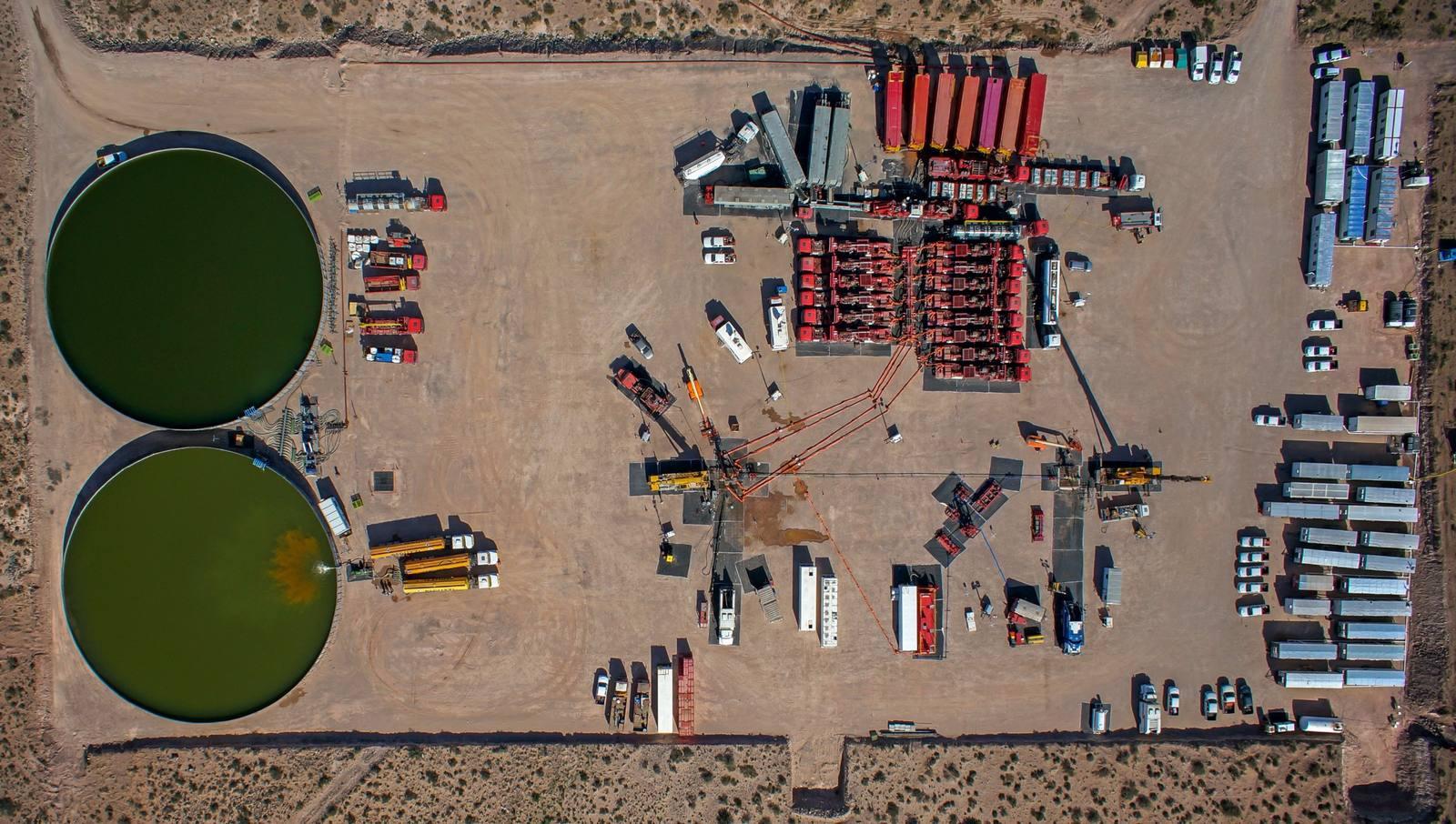
This approach is especially valuable in oilfield environments where equipment frequently moves between yards, wellsites, service locations, and customers. Centralized oil and gas asset management software gives operations teams better visibility into the location, condition, history, and deployment of field assets.
Use Real-Time Location Data Where It Makes Sense
Not every asset requires GPS tracking, but high-value or frequently moved equipment can benefit significantly from location technology.
GPS, telematics, IoT devices, QR codes, RFID, and mobile check-ins can all contribute to equipment visibility depending on the asset type and operating environment.
The goal is not necessarily to track every movement second by second. It is to make sure the system reflects what is actually happening in the field.
There is measurable value in this visibility. According to Verizon Connect's construction asset tracking research, 62% of construction companies surveyed said dedicated equipment tracking helped improve security, while 43% reported improved equipment utilization.
When location data flows directly into the operational system, teams no longer have to depend entirely on somebody updating a spreadsheet after equipment moves.
Make Equipment Transfers Part of the Workflow
A major visibility gap occurs when equipment moves informally between jobsites.
A supervisor may call another supervisor and say, "You can take our generator when we're finished."
Operationally, the transfer makes sense. Digitally, however, the generator may still appear assigned to the original project.
Equipment transfers should therefore be recorded as part of the workflow.
A simple digital transfer process can capture:
-
Equipment being transferred
-
Current jobsite
-
Destination jobsite
-
Person requesting the transfer
-
Person receiving the equipment
-
Transfer date and time
-
Equipment condition
-
Updated availability
Once the transfer is completed, the equipment record should update automatically.
This creates accountability without forcing teams to maintain separate movement logs.
Connect Asset Visibility With Dispatch
Equipment availability and technician scheduling are closely connected.
A technician may be available for tomorrow's job, but if the required equipment is sitting 100 miles away, the job is not actually ready to execute.
A field service management software platform can connect technicians, jobs, assets, schedules, and field activity so dispatchers can make decisions using the complete operational picture.
Before assigning a job, dispatchers should be able to answer:
-
Is the required equipment available?
-
Where is it currently located?
-
Is another project using it?
-
When will it become available?
-
Does it need inspection or maintenance first?
-
Can equipment from another nearby site be redeployed?
Having these answers available immediately reduces the number of coordination calls required before every dispatch.
Monitor Utilization, Not Just Location
Knowing where equipment is located solves only part of the problem.
An asset can be clearly visible on a map and still sit unused for weeks.
Operations teams should therefore monitor utilization alongside location.
Consider an excavator that has remained at Jobsite A for ten days but has logged almost no operating hours during the last four days. Meanwhile, Jobsite B is requesting the same type of excavator.
Without utilization data, the company may rent another machine.
With utilization visibility, the operations manager can investigate whether the existing excavator can be transferred.
Over time, utilization data also helps companies identify which assets they should purchase, sell, relocate, or rent less frequently.
Connect Equipment Tracking With Maintenance
Equipment should not become "available" simply because it has returned from a job.
It may first need inspection, cleaning, repairs, certification, or preventive maintenance.
Connecting asset tracking with maintenance workflows prevents equipment from being dispatched before it is ready. For pressure control and rental tool fleets, that readiness check also has to cover certification due dates, which is the focus of our guide to oilfield equipment tracking.
For example, when equipment returns from a field job, the system could automatically check operating hours or maintenance thresholds. If servicing is required, its status could change from returned to maintenance required instead of immediately becoming available.
Teams can also use strategies such as preventive vs predictive vs proactive maintenance to determine when maintenance should occur based on schedules, asset condition, operating data, and emerging risks.
This creates a much more accurate definition of equipment availability.
Do Not Forget Parts and Supporting Inventory
Sometimes the equipment itself is available, but the job still cannot start because a required part, attachment, tool, or consumable is missing.
Equipment visibility becomes significantly more useful when connected with inventory data.
A team preparing a pump for deployment, for example, may need to confirm that the correct seals, filters, fittings, hoses, or replacement components are available before dispatch.
Better spare parts management helps teams connect parts availability with planned field work, reducing the risk of discovering shortages only after technicians reach the jobsite.
Move From "Where Is It?" to "What Should We Do With It?"
The biggest benefit of modern equipment tracking is not simply putting assets on a map.
It is giving operations teams enough context to make better decisions.
Instead of asking:
"Where is the compressor?"
Teams should be able to see:
"The compressor is at Jobsite A, the job finishes today, it has no maintenance hold, and Jobsite B needs one tomorrow."
That changes equipment tracking from a recordkeeping activity into an operational decision-making capability.
Platforms such as Equipt.ai can bring jobs, equipment, field teams, maintenance, rentals, and operational workflows together so teams have a shared view of what is happening across the field.
Rather than spending the day calling jobsites or reconciling spreadsheets, dispatchers and operations managers can focus on allocating equipment where it creates the most value.
When every asset has a current location, job assignment, status, condition, and availability in one system, the question is no longer, "Does anyone know where this equipment is?"
The answer is already there.

Aman Kaur
About the author
Dr. Hon. Amanpreet Kaur is the Co-Founder, CTO, and Chief AI Officer at Equipt.ai, where she builds operational AI for energy, industrial equipment, field teams, and critical infrastructure. With over 14 years of experience in enterprise technology and industrial operations, she writes about operational AI, digital twins, predictive maintenance, and enterprise-scale transformation.